
TL;DR: Quick Guide Summary
Need a walker fast? Here’s everything you need to know about the most stable walkers for seniors in 2025 at a glance.
- Standard walkers (no wheels) provide maximum stability – best for severe balance issues
- Two-wheeled walkers offer excellent stability while being easier to use than standard
- Four-wheeled rollators less stable but include seats and are easier to maneuver
- Look for: Wide base, large wheels (8-10″), sturdy frame, quality brakes, proper height
- Weight capacity matters: Standard (up to 400 lbs), Bariatric (400-500 lbs)
- Proper height: Handles should align with wrists when arms hang naturally
- Fall prevention: Walkers reduce fall risk by 60% when used correctly
Finding the most stable walker for elderly seniors is crucial for maintaining independence, preventing falls, and ensuring quality of life. With over one in four older adults experiencing a fall each year, choosing the right mobility aid can be life-changing. This comprehensive guide reviews the top stable walkers available in 2025, helping you make an informed decision for yourself or a loved one.
Understanding Walker Stability: What Makes a Walker Stable?
Before diving into specific models, it’s essential to understand what constitutes a stable walker. Stability in walkers depends on several key factors:
Frame Construction: The most stable walkers feature robust aluminum or steel frames with reinforced cross-braces. Standard walkers without wheels provide maximum stability as all four legs remain planted on the ground.
Weight Distribution: A well-designed stable walker distributes the user’s weight evenly across the frame, preventing tipping and ensuring balance support.
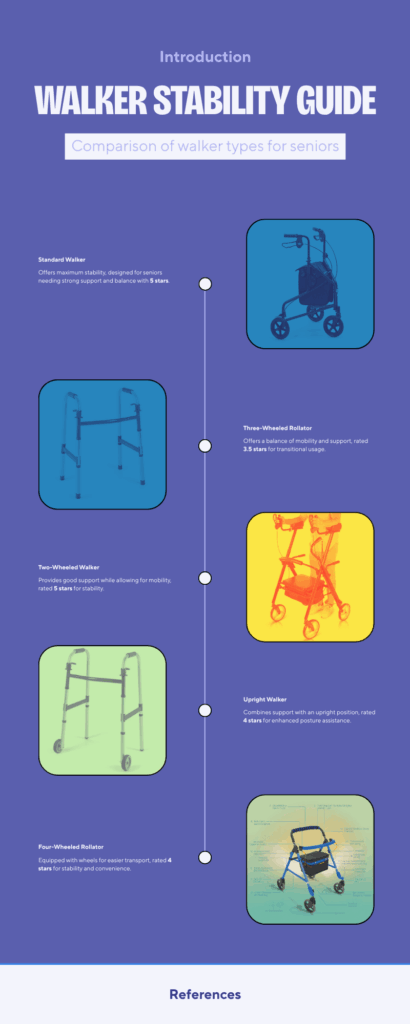
Wheel Configuration: While wheelless walkers offer the most stability, two-wheeled walkers with rear glide tips provide excellent stability while requiring less lifting. Four-wheeled rollators can be stable when properly designed with wide wheelbases.
Base Width: Wider bases between the legs create a more stable platform, though the walker must still fit through standard doorways (typically 24-28 inches wide).
Types of Walkers by Stability Level
Most Stable: Standard Walkers (No Wheels)
Standard walkers provide the highest level of stability because they must be completely lifted off the ground with every step. These walkers work best for indoor use and are especially useful for patients recovering or rehabilitating from hip or leg injury or surgery. They’re ideal for users who need maximum support and can bear weight on the walker while having sufficient upper body strength to lift it.
Highly Stable: Two-Wheeled Walkers
Two-wheeled walkers are a good choice for people who want extra stability, especially while walking on different surfaces, and because they aren’t lifted off the ground with each step, they facilitate a more normal walking pattern. The combination of front wheels and rear glide tips offers excellent stability while reducing the effort required.
Moderately Stable: Four-Wheeled Rollators
Four-wheeled rollators offer less stability than standard or two-wheeled walkers but provide greater mobility and convenience. The key is selecting models with large wheels, wide frames, and reliable braking systems.
Top 10 Most Stable Walkers for Elderly Seniors in 2025
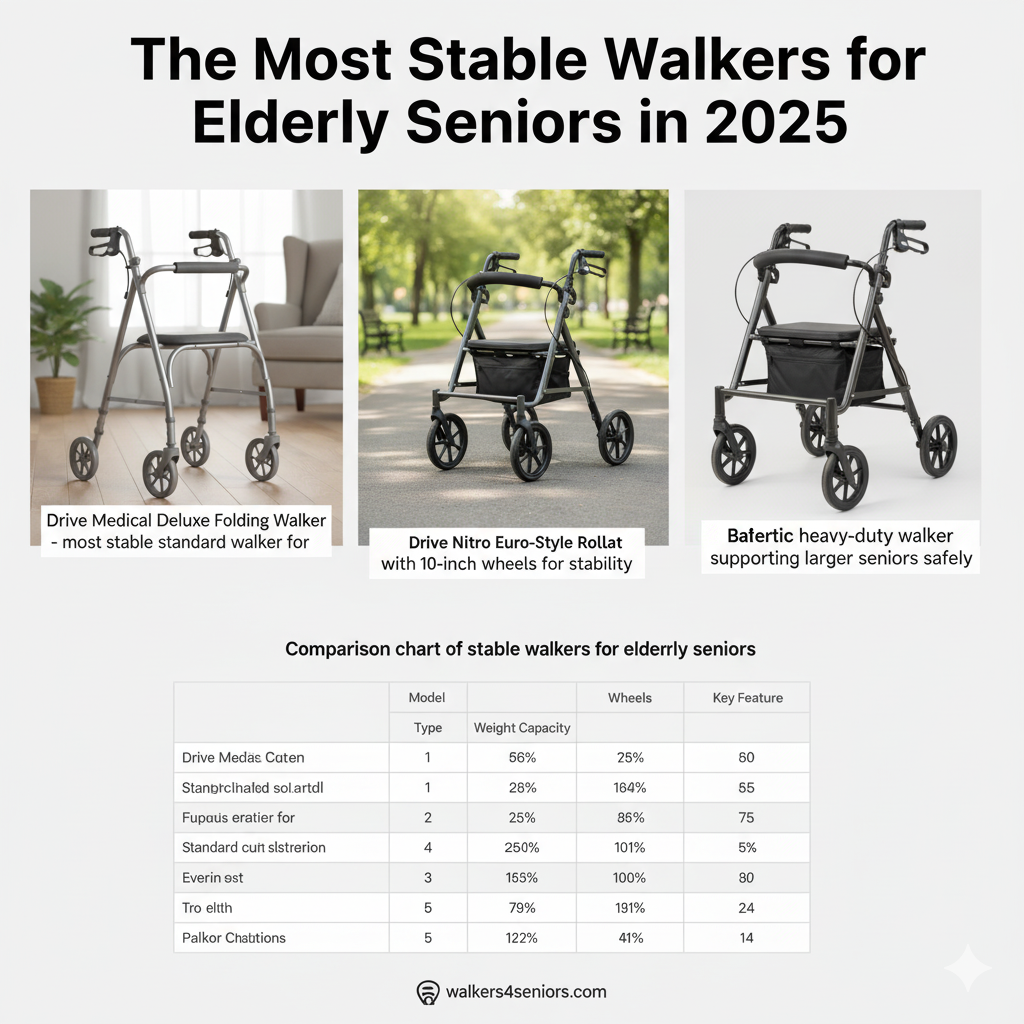
1. Drive Medical Deluxe Two-Button Folding Walker – Best for Maximum Stability
Type: Standard Walker (No wheels or optional 2 wheels) Stability Rating: ⭐⭐⭐⭐⭐ (5/5) Weight Capacity: 400 lbs Weight: 5-6 lbs
The Drive Medical Deluxe Folding Walker is a classic standard walker and remains one of the most prescribed mobility aids for seniors who need maximum stability. This lightweight aluminum frame walker weighs only about 5-6 pounds, making it easy to maneuver while providing rock-solid support.
Key Stability Features:
- No-wheel design for maximum ground contact
- Lightweight yet sturdy aluminum construction
- Wide base provides excellent balance support
- Optional two-wheel configuration with rear glide tips
Pros:
- Maximum stability for high fall-risk seniors
- Ultra-lightweight for easy handling
- Height adjustable to fit most users
- Medicare and insurance covered
- Affordable price point
Cons:
- Requires arm strength to lift
- No built-in seat for resting
- Best suited for indoor use
- Basic design without storage
Best For: Seniors recovering from surgery, those with significant balance issues, or anyone requiring maximum stability and weight-bearing support.
Customer Reviews: “This walker provides excellent support for those with significant balance issues. Its simplicity and stability make it a top choice.” – Medicare User Review “Lightweight yet sturdy – perfect for my recovery after hip surgery.” – Verified Purchaser
2. Drive Medical Nitro Euro-Style Rollator – Best Overall Stable Rollator
Type: Four-Wheeled Rollator Stability Rating: ⭐⭐⭐⭐½ (4.5/5) Weight Capacity: 300 lbs (Sprint model: 350 lbs) Weight: 17-20 lbs
The Drive Medical Nitro Euro-Style Rollator is frequently acclaimed as the best walker for seniors overall, combining sleek design with top-tier functionality. The large 10-inch front wheels and sturdy aluminum frame make this one of the most stable rollators available.
Key Stability Features:
- Extra-large 10-inch front casters for smooth terrain navigation
- Reinforced cross-braces for structural integrity
- Internally-routed brake cables prevent snagging
- Wide wheelbase for enhanced balance
Pros:
- Excellent stability on various terrains
- Comfortable padded seat with backrest
- Easy folding mechanism
- Modern, attractive design
- Medicare and insurance covered
Cons:
- Higher price point ($150-250)
- Heavier than basic walkers
- May be wide for very narrow spaces
Best For: Active seniors who need a stable rollator for both indoor and outdoor use, with the convenience of a seat and storage.
Customer Reviews: “Folds flat. Very stable. Great color. Moves easily and is very steerable. Worth the extra money” – Drive Medical Customer “As a 6′, 300 pound-plus man, this is the best walker I have come across” – SpinLife Review “The large 10-inch front casters made transitions over bumps, thresholds, and uneven terrain smoother” – Reviewed.com
3. Medline Premium Empower Rollator – Most Comfortable Stable Walker
Type: Four-Wheeled Rollator Stability Rating: ⭐⭐⭐⭐½ (4.5/5) Weight Capacity: 300 lbs Weight: 17 lbs
The Medline Premium Empower Rollator is a feature-packed walker that shines in terms of comfort and user-friendly design with a strong aluminum frame supporting up to 300 lbs. The innovative “step-inside” design enhances stability and promotes upright walking.
Key Stability Features:
- Memory foam padded seat for comfort
- Flip-up seat allows walking inside the frame
- Wide frame base for enhanced balance
- Adjustable height (4’11” to 6’4″)
Pros:
- Excellent comfort with memory foam seat
- Antimicrobial protection on seat/backrest
- Includes cup holder and storage
- Tool-free assembly
- Good stability with comfort features
Cons:
- Not as compact when folded
- Higher price range
- Bulkier than basic models
Best For: Seniors who prioritize comfort alongside stability, need frequent rest breaks, and want extra features.
Customer Reviews: “The memory foam seat makes all the difference on longer walks. Very stable and comfortable.” – Home Depot Customer “Easy height adjustments make this perfect for my tall husband who needs reliable support.” – Verified Review
4. Hugo Elite Rollator Walker – Best Stable Mid-Range Option
Type: Four-Wheeled Rollator Stability Rating: ⭐⭐⭐⭐ (4/5) Weight Capacity: 300 lbs Weight: 18 lbs
The Hugo Elite Rollator offers excellent value with solid stability features at a mid-range price point. The Hugo Elite is built with an aluminum frame, supporting users up to 300 lbs, and features four 8-inch wheels that handle indoor and outdoor surfaces well.
Key Stability Features:
- Sturdy aluminum frame construction
- 8-inch wheels for smooth navigation
- Ergonomic shock-absorbing hand grips
- Curved backrest for lumbar support
Pros:
- Well-constructed and durable
- Comfortable ergonomic handles
- Ample storage (under-seat pouch + saddle bag)
- Tool-free setup
- Good stability-to-price ratio
Cons:
- Slightly heavier (18 lbs)
- Not as easy to fold as some models
- Wider turning radius
Best For: Budget-conscious seniors seeking reliable stability without premium pricing.
Customer Reviews: “Its been a great help to me i walk faster longer and better. easy assembled light weight very glad i own one” – Hugo Customer “This is a stable rollator, narrower in the front than the back. The 8-inch wheels were crucial for easier outdoor navigation” – SupremeMed Review “I have had this model of Hugo since 2020. I always return to this model because of its stability and adjustability” – Long-term User
5. Carex Steel Rollator Walker – Most Stable Heavy-Duty Budget Option
Type: Four-Wheeled Rollator Stability Rating: ⭐⭐⭐⭐½ (4.5/5) Weight Capacity: 350-400 lbs Weight: 17-18 lbs
The Carex Steel Rollator Walker is built with a reinforced steel frame, offering exceptional durability and stability for users up to 350 lbs with confidence. The steel construction provides superior stability compared to lighter aluminum models.
Key Stability Features:
- Reinforced steel frame construction
- High weight capacity (350-400 lbs)
- Solid 6-inch wheels
- Strong cross-bracing
Pros:
- Exceptional durability and stability
- Higher weight capacity
- Affordable price point
- Padded seat and backrest
- Sturdy feel for larger users
Cons:
- Heavier to lift (17.5 lbs)
- Steel can rust if not kept dry
- Smaller wheels (6-inch)
- Limited color options
Best For: Larger seniors or those who prioritize maximum stability and durability over weight.
Customer Reviews: “The steel frame gives me confidence – it feels rock solid and stable.” – Amazon Customer “Perfect for heavier users who need a truly sturdy walker.” – Medical Supply Review
6. Vive Folding Walker – Best Lightweight Stable Walker
Type: Two-Wheeled Walker Stability Rating: ⭐⭐⭐⭐⭐ (5/5) Weight Capacity: 250 lbs Weight: 5-6 lbs
The Vive Folding Walker is constructed from anodized aluminum, weighing under 6 lbs, making it one of the lightest options while supporting up to 250 lbs safely. Despite its lightweight design, it provides excellent stability with two front wheels and rear glide tips.
Key Stability Features:
- Two 5-inch front wheels with rear glide caps
- Anodized aluminum frame
- Ultra-lightweight yet sturdy
- Height adjustable
Pros:
- Excellent stability-to-weight ratio
- Very affordable
- Easy to fold and transport
- Includes storage pouch
- Great for travel
Cons:
- Lower weight capacity (250 lbs)
- No built-in seat
- Basic design
- Not ideal for outdoor terrain
Best For: Seniors who need stable support but want the lightest possible option for easy handling.
Customer Reviews: “Perfect lightweight walker that doesn’t compromise on stability. Easy for me to lift into my car.” – Elderly User “The two-wheel design gives me stability without having to lift the entire walker.” – Physical Therapy Patient
7. NOVA Traveler 3-Wheel Walker – Most Maneuverable Stable Walker
Type: Three-Wheeled Rollator Stability Rating: ⭐⭐⭐½ (3.5/5) Weight Capacity: 250 lbs Weight: 16.5 lbs
The NOVA Traveler 3-Wheel Walker features a tri-wheel design that makes it incredibly maneuverable, especially in tight spaces like small apartments, narrow hallways, or crowded stores. While not as stable as four-wheeled models, it offers good balance support for active seniors.
Key Stability Features:
- Three 8-inch rubber wheels
- Feather Touch hand brakes
- Lightweight aluminum frame
- Small turning radius
Pros:
- Excellent maneuverability
- Lightweight (16.5 lbs)
- Easy-to-use brakes
- Compact folding design
- Good for tight spaces
Cons:
- Less stable than 4-wheel models
- No seat available
- Lower weight capacity
- Not ideal for heavy leaning
Best For: Active seniors in small living spaces who need balance support but prioritize maneuverability.
Customer Reviews: “Perfect for my small apartment – turns on a dime and fits everywhere.” – Urban Senior “Not as stable as my old walker but much easier to use in tight spaces.” – Apartment Dweller
8. Upright Posture Walker (UPWalker/ELENKER) – Most Stable for Posture Support
Type: Four-Wheeled Upright Rollator Stability Rating: ⭐⭐⭐⭐ (4/5) Weight Capacity: 300 lbs Weight: 20+ lbs
Upright walkers include forearm-height padded armrests and handles that adjust to a higher level, encouraging users to stand straight and place their forearms on the supports, which helps take pressure off the wrists and lower back.
Key Stability Features:
- Forearm support platforms
- Larger wheels (8-10 inches)
- Wide stable base
- Upright frame design
Pros:
- Promotes excellent posture
- Reduces wrist and back strain
- Includes seat and backrest
- Good stability with comfort
- Improves confidence and visibility
Cons:
- Bulkier and heavier (20+ lbs)
- More expensive ($300-600)
- Limited Medicare coverage
- Harder to maneuver in tight spaces
Best For: Seniors with back or neck pain who need stable support while maintaining upright posture.
Customer Reviews: “Game changer for my back pain – I can finally walk upright comfortably.” – Chronic Pain User “More stable than I expected and my posture has improved dramatically.” – Senior Walker User
9. Heavy-Duty Bariatric Rollator – Most Stable for Larger Seniors
Type: Four-Wheeled Heavy-Duty Rollator Stability Rating: ⭐⭐⭐⭐⭐ (5/5) Weight Capacity: 400-500 lbs Weight: 20-30 lbs
Heavy-duty bariatric rollators are made of reinforced steel or high-strength aluminum and typically support weight capacities of 400 to 500 lbs, featuring a wider seat and broader distance between handles.
Key Stability Features:
- Reinforced steel/aluminum frame
- Extra-wide base and seat
- Large 8-inch wheels
- Double-strength welds
Pros:
- Very high weight capacity
- Excellent stability for larger users
- Durable construction
- Comfortable wide seat
- Long-lasting frame
Cons:
- Heavy (20-30 lbs)
- Wide frame (may not fit narrow doors)
- Less portable
- Limited style options
Best For: Larger seniors who need maximum weight capacity with stable, reliable support.
Customer Reviews: “Finally a walker that can handle my weight safely – feels rock solid.” – Bariatric User “Wide seat and frame give me the confidence to walk without fear.” – Large Frame Senior
10. Drive Medical Deluxe 2-Button Walker with Wheels – Best Basic Stable Walker
Type: Two-Wheeled Walker Stability Rating: ⭐⭐⭐⭐⭐ (5/5) Weight Capacity: 350 lbs Weight: 6-7 lbs
The Drive Medical Deluxe 2-Button Folding Walker has no frills to speak of, which keeps the price nice and low, and is adjustable with padded handles. The two-wheel design offers excellent stability while being easier to use than a standard walker.
Key Stability Features:
- Two front wheels with rear tips
- Lightweight aluminum frame
- Vinyl-contoured hand grips
- High weight capacity
Pros:
- Excellent stability
- Very affordable
- Lightweight and portable
- Easy two-button folding
- Fits through standard doorways
Cons:
- No seat or storage
- Basic design
- Limited features
- Best for short distances
Best For: Budget-conscious seniors who need reliable stability without extra features.
Customer Reviews: “This design is best for people who need just a little help with balance and can lift the walker completely off the ground” – SafeWise Health Expert “Simple, stable, and affordable – everything I needed.” – Budget Shopper
Comparison Table: The Most Stable Walkers for Seniors 2025
| Walker Model | Type | Stability Rating | Weight Capacity | Weight | Price Range | Best For |
|---|---|---|---|---|---|---|
| Drive Medical Deluxe Folding | Standard (No Wheels) | ⭐⭐⭐⭐⭐ | 400 lbs | 5-6 lbs | $30-60 | Maximum Stability |
| Carex Steel Rollator | 4-Wheel Rollator | ⭐⭐⭐⭐½ | 350 lbs | 17-18 lbs | $80-120 | Heavy-Duty Budget |
| Bariatric Rollator | 4-Wheel Heavy-Duty | ⭐⭐⭐⭐⭐ | 400-500 lbs | 20-30 lbs | $200-350 | Larger Seniors |
| Drive Nitro Euro-Style | 4-Wheel Rollator | ⭐⭐⭐⭐½ | 300 lbs | 17-20 lbs | $150-250 | Overall Best Stable Rollator |
| Medline Empower | 4-Wheel Rollator | ⭐⭐⭐⭐½ | 300 lbs | 17 lbs | $180-280 | Comfort + Stability |
| Hugo Elite | 4-Wheel Rollator | ⭐⭐⭐⭐ | 300 lbs | 18 lbs | $100-180 | Mid-Range Value |
| Vive Folding Walker | 2-Wheel Walker | ⭐⭐⭐⭐⭐ | 250 lbs | 5-6 lbs | $35-70 | Lightweight Stable |
| Drive 2-Button with Wheels | 2-Wheel Walker | ⭐⭐⭐⭐⭐ | 350 lbs | 6-7 lbs | $40-80 | Basic Stable Walker |
| UPWalker/Upright Walker | 4-Wheel Upright | ⭐⭐⭐⭐ | 300 lbs | 20+ lbs | $300-600 | Posture Support |
| NOVA Traveler 3-Wheel | 3-Wheel Rollator | ⭐⭐⭐½ | 250 lbs | 16.5 lbs | $120-180 | Tight Spaces |
How to Choose the Most Stable Walker for Your Needs
Assess Your Stability Requirements
High Fall Risk (Recent falls, severe balance issues, post-surgery):
- Choose: Standard walker (no wheels) or two-wheeled walker
- Examples: Drive Medical Deluxe Folding Walker, Vive Folding Walker
Moderate Balance Support (Some balance issues, arthritis, fatigue):
- Choose: Four-wheeled rollator with large wheels
- Examples: Drive Nitro, Hugo Elite, Medline Empower
Light Support Needed (Mild balance concerns, stamina issues):
- Choose: Lightweight rollator or three-wheeled walker
- Examples: NOVA Traveler, lightweight rollators
Consider Your Weight and Size
- Under 250 lbs: Most standard walkers and rollators
- 250-350 lbs: Drive Deluxe (400 lb capacity), Carex Steel Rollator
- Over 350 lbs: Bariatric rollators (400-500 lb capacity)
Evaluate Your Usage Environment
Primarily Indoor:
- Narrow spaces: NOVA 3-wheel, compact rollators
- Standard homes: Any standard or two-wheeled walker
- Need for seat: Compact rollators like Hugo Elite
Indoor and Outdoor:
- Large wheels essential (8-10 inches)
- Drive Nitro (10-inch wheels)
- Hugo Elite (8-inch wheels)
- All-terrain models for rough surfaces
Mostly Outdoor:
- All-terrain rollators
- Large pneumatic wheels
- Weather-resistant frames
Physical Capabilities Assessment
Upper Body Strength:
- Strong: Can use standard walker (requires lifting)
- Moderate: Two-wheeled walker
- Limited: Four-wheeled rollator (no lifting required)
Hand/Grip Strength:
- Strong: Any walker type
- Moderate: Look for easy-squeeze brakes (Feather Touch)
- Weak: Upright walker with forearm support
Important Features for Stability
Essential Stability Features:
- Wide Base: Prevents tipping
- Large Wheels: Navigate obstacles smoothly (8-10 inches ideal)
- Quality Brakes: Reliable hand brakes with easy locking
- Adjustable Height: Proper height prevents leaning/hunching
- Sturdy Frame: Aluminum or steel with cross-bracing
Additional Stability Enhancers:
- Anti-tip features
- Cane/crutch holders
- Proper weight distribution
- Reinforced joints and welds
Safety Tips for Using Your Stable Walker
Proper Walker Fitting
- Height Adjustment: Stand upright; handles should align with your wrists
- Comfortable Grip: Elbows slightly bent (15-20 degrees)
- Posture Check: Stand straight, don’t hunch
- Test Walk: Practice in safe space before outings
Safe Walking Technique
With Standard or Two-Wheeled Walkers:
- Move walker forward 6-8 inches
- Step with weaker leg first
- Follow with stronger leg
- Keep body within walker frame
- Look ahead, not down at feet
With Four-Wheeled Rollators:
- Push walker ahead slightly
- Walk naturally at steady pace
- Use brakes when stopping or on inclines
- Lock brakes before sitting
- Maintain upright posture
Fall Prevention Strategies
- Clear Pathways: Remove tripping hazards at home
- Proper Lighting: Ensure adequate lighting, especially at night
- Non-Slip Surfaces: Use rubber tips or wheels appropriate for flooring
- Regular Maintenance: Check walker weekly for loose screws, worn wheels
- Footwear: Wear supportive, non-slip shoes
- Practice: Regular use builds confidence and proper technique
Medicare Coverage and Insurance for Stable Walkers
What Medicare Covers
Medicare Part B typically covers 80% of the cost of a walker prescribed by your doctor, and supplemental insurance often covers the rest. Coverage includes:
Covered Walkers:
- Standard walkers (no wheels)
- Two-wheeled walkers
- Four-wheeled rollators
- Bariatric walkers (with medical necessity)
Requirements for Coverage:
- Doctor’s prescription stating medical necessity
- Face-to-face examination within 6 months
- Detailed documentation of mobility limitations
- Purchase from Medicare-approved supplier
Private Insurance
Most private insurance plans follow Medicare guidelines but may offer:
- Lower copays
- Coverage for premium models
- Shorter approval times
- Broader supplier networks
Tips for Insurance Approval
- Get Proper Documentation: Detailed prescription from doctor
- Use Approved Suppliers: Check Medicare/insurance provider lists
- Submit Complete Paperwork: Include all medical records
- Appeal if Denied: Many denials are overturned on appeal
- Consider Donation Programs: Organizations provide walkers at reduced/no cost
Maintaining Your Stable Walker for Long-Term Safety
Daily Maintenance
- Visual Inspection: Check for damage, cracks, or loose parts
- Clean Grips: Wipe down handles with mild soap
- Test Brakes: Ensure proper function before each use
- Check Wheels: Remove debris, ensure smooth rolling
Weekly Maintenance
- Tighten Screws: Check and tighten all bolts and screws
- Inspect Tips/Wheels: Look for wear, replace if needed
- Clean Frame: Wipe down entire walker
- Test Height Adjustments: Ensure pins are secure
Monthly Maintenance
- Deep Cleaning: Thorough cleaning of all components
- Lubrication: Apply to moving parts if needed
- Replace Worn Parts: Hand grips, wheel treads, brake pads
- Professional Check: Consider annual professional inspection
When to Replace Your Walker
Replace your walker if you notice:
- Bent or cracked frame
- Wheels that won’t roll smoothly
- Brakes that don’t lock properly
- Excessive rust or corrosion
- Walker no longer fits your needs
- Safety features failing
Frequently Asked Questions About Stable Walkers for Seniors
Conclusion: Finding Your Most Stable Walker
More than one in four older adults experiences a fall each year, and using a walker can significantly reduce the risk of dangerous falls. Choosing the most stable walker for your needs is a crucial decision that impacts your safety, independence, and quality of life.
Our Top Recommendations by Category:
Most Stable Overall: Drive Medical Deluxe Folding Walker (Standard, no wheels) Best Stable Rollator: Drive Medical Nitro Euro-Style Rollator Best Value Stability: Carex Steel Rollator or Hugo Elite Best for Larger Seniors: Heavy-Duty