
Affiliate disclosure: This article contains Amazon affiliate links, including a paid brand partnership through Amazon Creator Connections. Walkers4Seniors earns a commission if you buy through these links, at no extra cost to you. This is general information, not medical advice.
By Walkers4Seniors Editorial Team · Last updated October 2026
In short: A rollator is best if you can still walk but need support and a place to rest. A mobility scooter makes sense when walking distances (a store, a park, the neighborhood) leaves you exhausted or in pain, but you can still sit upright, steer with both hands and get on and off safely. Many seniors use both: a walker at home and a scooter for longer outings.
Rollator or Mobility Scooter: What’s the Difference?
| Rollator | Mobility scooter | |
|---|---|---|
| You walk? | Yes, it supports your walking | No, you ride seated |
| Best distance | Home and short trips | Shopping, parks, neighborhood |
| Keeps you active | Yes, you keep using your legs | Less, so keep walking at home |
| Indoor use | Easy | Limited by turning space |
| Typical cost | Lower | Higher |
Signs It May Be Time for a Mobility Scooter
- You skip outings because you know you can’t walk that far, even with your rollator.
- You sit on your rollator seat several times on every trip to the store.
- Pain or shortness of breath limits how far you walk, and your doctor agrees a scooter is safe for you.
- You want to keep visiting friends, the park or the market on your own.
A scooter should add freedom, not replace movement. Keep walking with your walker at home and do the exercises your physical therapist recommends.
Who Should NOT Use a Mobility Scooter?
- Anyone who cannot sit upright without support for the length of a trip.
- Anyone with vision, memory or reaction-time problems that make steering around people and traffic unsafe.
- Anyone who cannot get on and off the seat safely.
When in doubt, ask for an occupational therapy assessment. In the US, Medicare may cover a scooter only when it is medically needed for use in the home and prescribed by a doctor, so check before buying.
What Should You Look for in a Scooter?
- Weight capacity comfortably above your weight.
- Range per charge that covers your longest usual trip, with room to spare.
- A removable battery, so you can charge it indoors without moving the whole scooter.
- Turning radius small enough for store aisles.
- Adjustable seat and tiller so you sit upright with relaxed arms.
- Lights and a reliable brake.
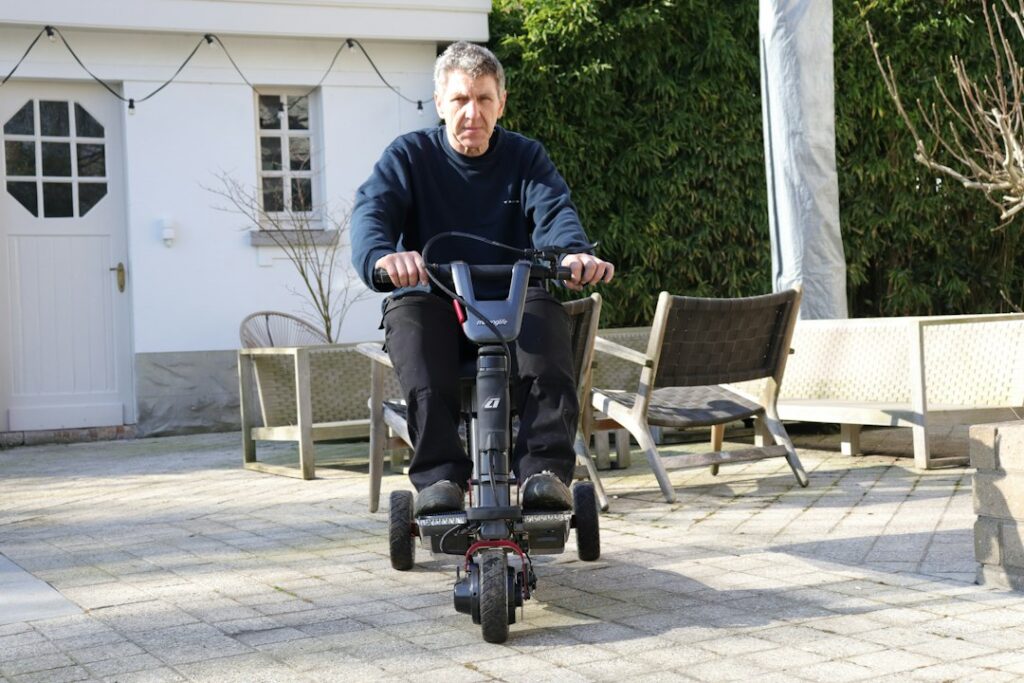
One Option to Consider: Havlo HS100 Mobility Scooter
The Havlo HS100 4-wheel mobility scooter is built for everyday errands. According to the manufacturer:
- 250W motor for smooth, steady riding at a comfortable pace.
- Removable 24V 12Ah lithium battery that you can charge separately.
- Up to 12.43 miles of range per charge.
- 300 lb weight capacity and 7-inch wheels.
- 43.3-inch turning radius for paths and shopping areas.
- Ergonomic seat with a breathable backrest and an adjustable handlebar.
It is a newer model with only a few reviews so far, so read the latest reviews and confirm the return policy before you buy.
Check price and availability on Amazon
Not Ready for a Scooter Yet?
A well-fitted rollator with a comfortable seat may be all you need. Start with our guide to the best walkers for seniors, read who should not use a rollator, and check your balance with the Timed Up and Go test.
Frequently Asked Questions
Does Medicare cover mobility scooters?
Medicare Part B covers power-operated vehicles (scooters) only when they are medically necessary. You need a face-to-face exam and a written prescription from a treating provider, and the supplier must be enrolled in Medicare. After the Part B deductible you pay 20% of the Medicare-approved amount if the supplier accepts assignment.
Do I need a prescription to buy a mobility scooter?
Not to buy one with your own money. You do need a face-to-face exam and a written prescription if you want Medicare to help pay for it.
Is a mobility scooter better than a rollator for seniors?
Neither is better for everyone. A rollator keeps you walking and works well indoors. A scooter is better for distances that leave you exhausted or in pain, as long as you can sit upright, steer with both hands and get on and off safely.
Can I use both a rollator and a mobility scooter?
Yes. Many seniors use a rollator or walker at home and for short trips, and a scooter for shopping, parks and longer outings. Keep walking at home so your legs stay strong.
How far can a mobility scooter go on one charge?
It depends on the model, battery, your weight and the terrain. Check the manufacturer’s range figure and choose one that covers your longest usual trip with room to spare. For example, the Havlo HS100 is rated by its maker for up to 12.43 miles per charge.
Sources: Medicare.gov: Wheelchairs & scooters. This is general information, not medical advice; ask your doctor or physical therapist which mobility aid is right for you.